The Anatomy of Retention: How Behavioral Data and Empathy Redefined
a FinTech Product and Fueled Scalability
In a mature FinTech ecosystem, the battle is no longer solely about user acquisition; it is about the cost of retention. By replacing friction-heavy legacy processes with a streamlined mobile ecosystem and confronting executive assumptions with the hard truth of demographic research, we not only reduced operational costs but permanently transformed the product culture within the organization.

The Business Challenge: The Paradox of High CAC and Regulatory Friction
Our business model relied heavily on returning customers, yet the Customer Acquisition Cost (CAC) and funnel drop-off rates remained sub-optimal. The root cause was systemic: operating in a highly regulated financial market dictated the use of long, complex web forms for almost every user interaction.
The core strategic objective was to engineer a "closed retention ecosystem" for pre-verified users. Instead of forcing them through cumbersome web procedures or relying on low-conversion email campaigns, we had to reduce the barrier to entry to zero. The vision was to introduce a frictionless "One-Click Loan" mechanism (for renewals or credit limit increases) via a modern mobile application leveraging direct communication channels (Push Notifications). We were pioneers of this approach in the short-term lending sector within our market.
Discovery Strategy:
When Big Data Meets Ground Truth
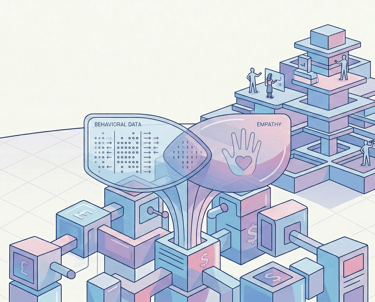
Before architecting a new solution to bypass the legacy infrastructure (an outdated early-generation Android app), I initiated the most extensive research initiative in the company's history. Instead of relying on stakeholder intuition, we merged the analysis of massive demographic datasets with rigorous qualitative validation.
Leveraging advanced analytical tools (SPSS), we extracted behavioral correlations from a cohort of over 1,500 user profiles, cross-referencing these findings with a series of targeted In-Depth Interviews (IDIs). The results were striking and led to a complete redefinition of our core personas.
We discovered that our primary target audience was not the assumed "young professionals experiencing temporary liquidity issues," as the business had hypothesized. They were highly vulnerable demographically—largely single mothers securing funds for their children's basic educational and living needs.
This revelation was a strategic turning point. From a design and leadership perspective, it dictated that we could not build an aggressive, dark-pattern-driven sales engine. We had to create an interface rooted in extreme transparency, ethics, and Responsible Lending principles, fundamentally respecting the vulnerability of our core users.
The Solution and Organizational Transformation
We guided the organization through a paradigm shift. We designed and launched a mobile application that entirely removed the cognitive load from the user while maintaining 100% strict legal compliance.
The true Return on Investment (ROI) of this initiative was not just the optimization of the conversion funnel, but a quantum leap in UX Maturity across the entire organization:
Business Impact: The company outpaced the market, maintaining an impressive Year-over-Year (YoY) growth rate of 30-40% in the following years—a direct result of establishing a loyal, high-retention mobile channel.
Product Culture: Demonstrating the undisputed value of research (colliding hard SPSS data with the authentic voice of the customer) permanently shifted the mindset of stakeholders and IT engineering teams. Co-creation workshops and human-centered design ceased to be viewed as an operational "cost" and became recognized as a fundamental driver of the company’s business strategy.
For me personally, this project stands as the ultimate proof that true design leadership is not merely about optimizing conversion metrics—it is about having the courage to advocate for socially responsible design at the executive level.