Autonomy-Driven Leadership: Building High-Performing Design Teams in a Decentralized Product Architecture
The true test of design leadership maturity is not how many decisions you make, but how effectively you delegate them. In an era where Artificial Intelligence absorbs analytical and operational workloads, a director's primary mandate shifts toward managing human ego, fostering psychological safety, and orchestrating autonomy.

Recruitment:
The Self-Awareness and Ego Filter
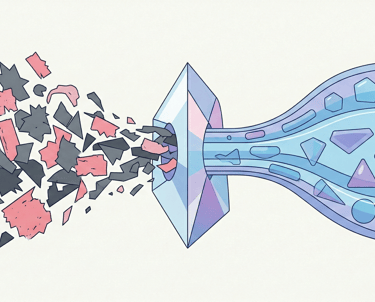
Building a high-performing team begins with a ruthless filter for emotional maturity. Craftsmanship and tool proficiency are merely the price of admission at the senior level. During the recruitment process, I actively screen out profiles exhibiting arrogance, a tendency to "mansplain" (e.g., lecturing me on the definition of a Jira ticket rather than discussing problem-solving), and a lack of communicative conciseness. The team must share a cohesive dynamic to withstand the high-pressure environment of corporate delivery cycles.
My most effective assessment tool is not a whiteboard design challenge, but a direct probe into self-awareness: "If I asked your significant other about your greatest strengths and weaknesses, what would they say?" This question instantly exposes a lack of self-reflection, an inflated ego, or—ideally—a profound awareness of personal limitations, which is the absolute bedrock of cross-functional collaboration.
Decentralized Decision-Making: The 99/1 Model
I do not believe in micromanagement. In a mature product organization, I implement a decentralized architecture anchored by cross-functional Feature Teams (Product Owner, UX, Business Analyst, Dev, QA).
Within this framework, 99% of design decisions reside entirely with the embedded UX Designer. My role as a director is deliberately reduced to the remaining 1%: final governance over the global Design System and organizational roadblock removal. I observe the outcomes of their work daily during agile ceremonies and workshops. This allows me to rigorously monitor quality without stripping my team of their agency, accountability, and product ownership.
Role Evolution
in the AI Era: Shifting to Discovery
The deployment of our Agentic AI ecosystem—which automated WCAG accessibility audits and behavioral data synthesis—did not lead to headcount reductions. Conversely, it catalyzed a necessary evolution of the designer's role.
Liberated from tedious, repetitive tasks, my team was challenged to step out of their comfort zones and claim strategic territories that were previously marginalized or outsourced to general CX departments. We pivoted heavily toward radical, qualitative user research directly within the digital product environment. We embedded Continuous Discovery processes and professional business workshop facilitation. Today, my team doesn't just "draw screens"—they discover and define core business problems alongside executive stakeholders.


NVC and Sandbox Management:
The True Metrics of Success
Managing a team can be exhausting; unresolved emotions often lurk beneath corporate suits, and interpersonal conflicts can drain the operational energy of an entire organization. Therefore, the foundation of my leadership philosophy is Marshall Rosenberg’s Nonviolent Communication (NVC). I do not treat this as a "soft" HR skill, but as a robust operational framework. It actively de-escalates tension and teaches the team to take ownership of their professional needs without attacking cross-functional partners.
Many industry leaders tout Employee Retention as their primary success metric. I consider this a flawed premise. My focus is on psychological well-being and radical candor. If an employee is profoundly unhappy or generates a toxic atmosphere, artificially keeping them on board "for the statistics" destroys the organizational culture. Healthy turnover is vastly superior to entrenched cynicism.
The true metric of my success as a leader is team proactivity—the exact moment my people initiate solutions independently, and their only message to me is: "Jarek, we identified a friction point, and here is how we are solving it."